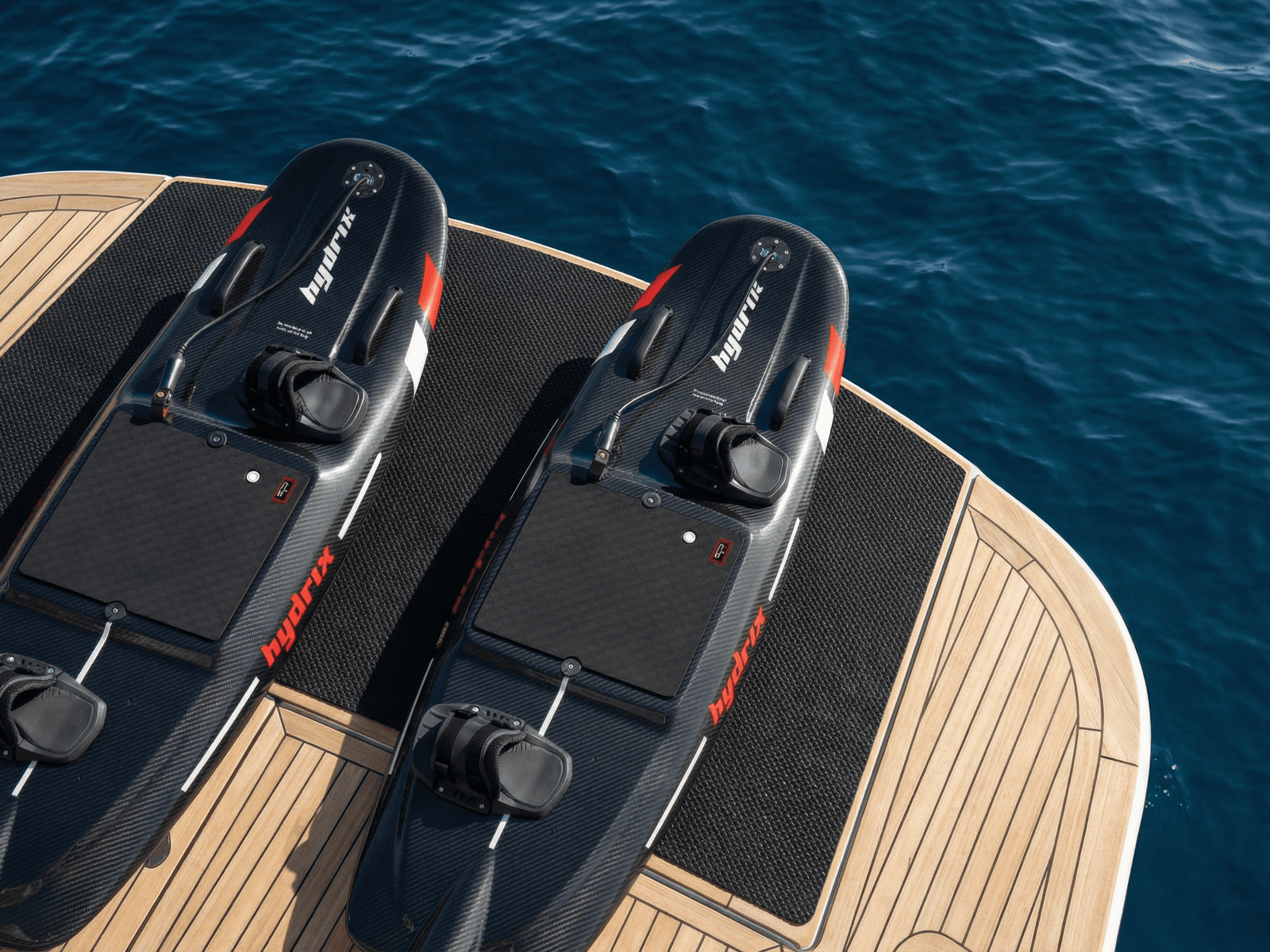
In the world of electric jetboards, there is a visible divide. On one side, you have mass-produced plastic shells and “carbon-look” stickers. On the other, you have the HYDRIX Fleet.
When we designed the HYDRIX series, we didn’t view Carbon Fiber as an optional luxury. We viewed it as a structural necessity. Whether you are riding the ONE, the PRO, or the APEX, your board is born from the same pedigree of materials found in Gulfstream jets, elite carbon race bikes, and hypercars.
Here is why our Toray 3K-12K Biaxial Integrated Carbon Fiber is the only material that belongs under your feet.
1. The Physics of Biaxial Strength: Multi-Axis Rigidity
Unlike standard materials that might only be strong in one direction, Hydrix uses Biaxial (Multi-Axis) Carbon Fiber. By aligning fibers across multiple axes, we create a hull that can handle the complex forces of high-speed surfing:
Torsional Stiffness: It resists twisting forces when you carve hard at 50 km/h.
Impact Absorption: It distributes the energy of chopping waves across the entire integrated structure, preventing the “vibration chatter” common in plastic or fiberglass boards.
Instant Power Transfer: When the 18kW motor kicks in, a biaxial hull doesn’t flex—it launches.
2. The Toray Pedigree: Aerospace DNA in the Ocean
We source our raw materials from Toray, the global leader in high-performance carbon. This isn’t “industrial grade” carbon; it’s Aerospace Grade.
Integrated Monocoque Molding: We don’t just wrap a shell. Our boards are cured as a single, seamless piece. There are no joints to fail and no glue to degrade.
3K to 12K Precision: We optimize the weave density to achieve a strength-to-weight ratio that traditional materials simply cannot touch. This is the same logic used in the chassis of million-dollar hypercars.
3. “Integrated Molding” vs. The “Sticker” Industry
This is the most critical distinction for a buyer. A “cheap” carbon board is often just a plastic shell with a Water Transfer Print (Hydro-dip) or a thin sticker. These provide zero structural benefit and actually add dead weight.
The HYDRIX difference:
Real Structural Weave: The texture you see is the actual structural skeleton of the board.
Standard across the Fleet: While competitors reserve carbon fiber for their $15,000 “Limited Editions,” every single Hydrix board—from ONE to APEX—is 100% biaxial carbon fiber.
4. The Weight-to-Power Equation
In electric surfing, weight is the enemy of adrenaline. A heavy board blunts acceleration and drains the battery.
| Material | Strength | Weight | Result |
| PE / ABS Plastic | Low | High | Sluggish, heavy, prone to vibration |
| Fiberglass | Medium | Medium | Good for entry-level, but lacks “snap” |
| HYDRIX Biaxial Carbon | Extreme | Ultra-Low | Instant 2.8s acceleration, surgical handling |
The Verdict: We Don’t Build Toys
We could have built a cheaper board using plastic. It would have been easier to mass-produce and cheaper to ship. But it wouldn’t be a HYDRIX.
By making Biaxial Carbon Fiber the standard for our entire range, we are making a statement: Professional performance is not an upgrade; it is our baseline. When you ride a Hydrix, you are piloting the pinnacle of material science—a board that is lighter, stiffer, and faster because its DNA demands it.
Don’t settle for the “look” of performance. Demand the Biaxial Gold Standard.